
Build a GEO operating system, one guide at a time.
Evergreen implementation guides for measurement, evidence, content and distribution.
Implementation guides that stay useful after the first run.
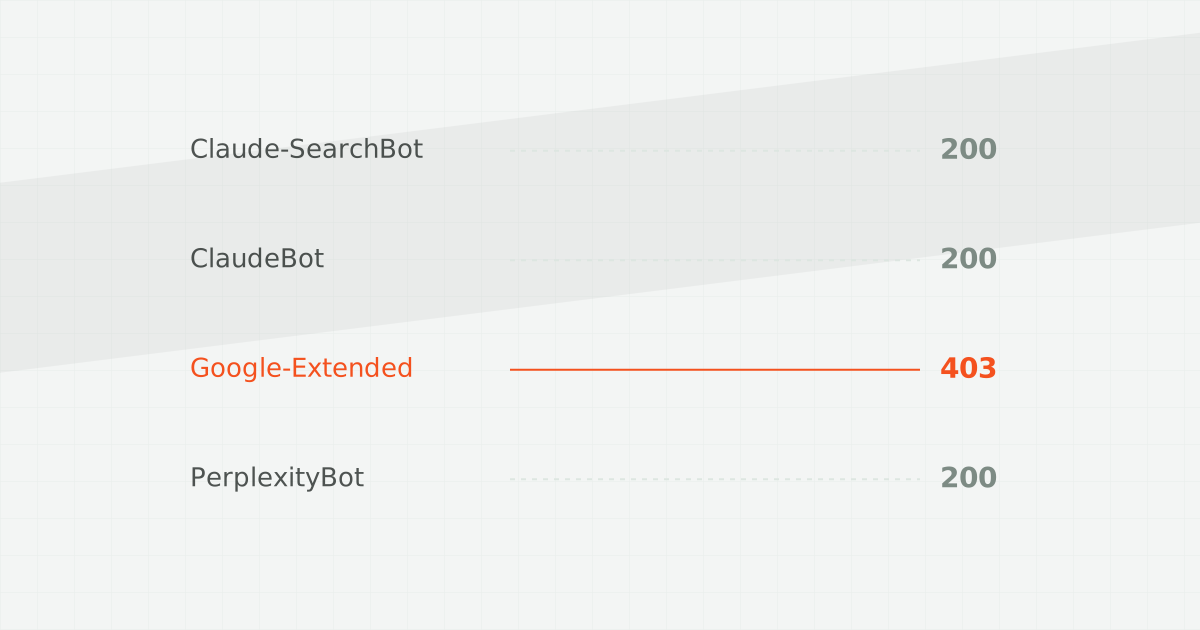
AI crawler list
17 AI crawler user agents, each row taken from vendor documentation: what it does and what blocking it costs.

GEO measurement framework
Define stable questions, engines, markets, evidence and review cadence before the first run.
Answer Engine Optimization (AEO): a working guide
What AEO is, how it differs from GEO and SEO, and the six things that actually decide whether an answer engine can lift an answer from your page and attribute it to you.

GEO vs SEO: what actually changes, and what carries over
Not a replacement and not a rebrand. SEO decides whether a page can be found; GEO decides whether the brand behind it gets named. Here is the part of your existing work that still counts.

AEO vs SEO: the extraction gap
SEO gets the page found. AEO gets an answer lifted out of it. Most pages that fail in AI answers pass the first test and fail the second — and the failure is structural, not editorial.

AI SEO vs GEO vs AEO vs LLMO: which term means what
Four names circulate for overlapping work. Here is what each one usefully means, where they genuinely differ, and which distinctions change what you do on Monday.
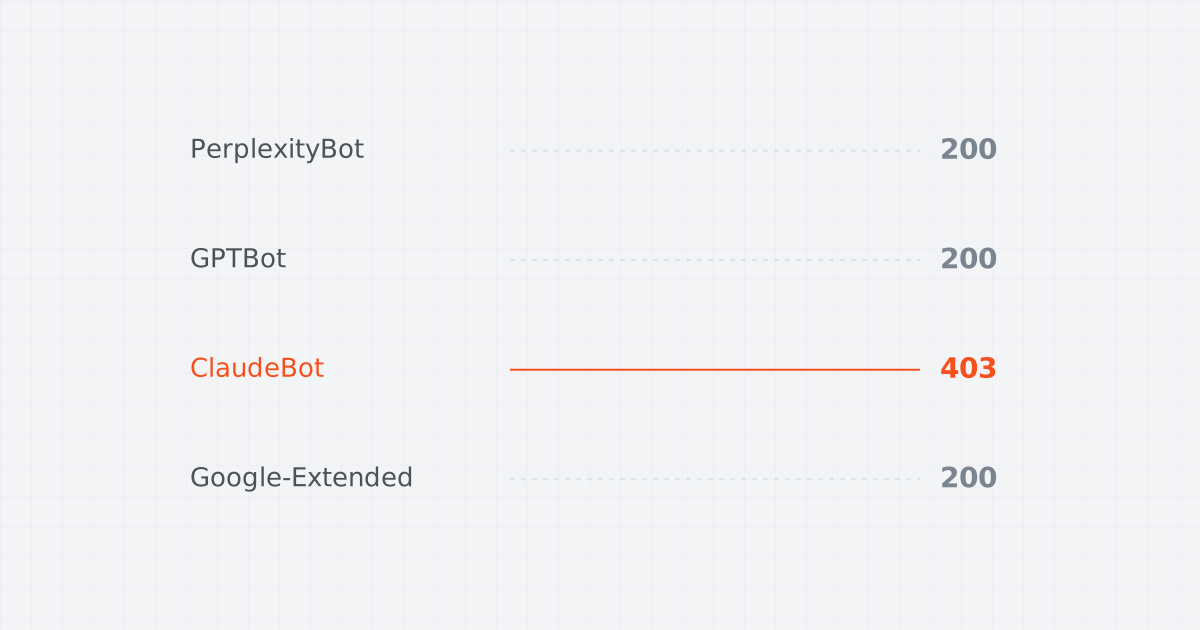
Letting AI crawlers in: robots.txt, GPTBot and the checks that actually prove it
Being fetchable is the precondition for being cited. Which agents to allow, why one rule for all of them is usually wrong, and why reading your robots.txt does not prove anything.
llms.txt: what it is, how to write one, and what it will not do
An honest guide to the llms.txt convention: the format, a structure that survives contact with a real site, and a clear statement of what no vendor guarantees.
How AI assistants decide which brands to name
What 1,188 answers across twelve categories and five models show about when assistants name brands at all, how concentrated each category is, and which sources they draw on.
Measuring share of voice in AI answers without fooling yourself
Four counting mistakes that inflate a brand's share of voice, each one invisible in the final number, and the reporting rules that prevent them.

Brand share in AI answers: how to measure it without fooling yourself
Four ways a brand-share number gets inflated — and the four rules that keep it defensible. Every one of them came from a bug we shipped and had to fix.

Building a prompt set that measures something real
The question set is the instrument. Get it wrong and every number downstream is wrong in the same direction — usually in your favour.
Designing a competitor set that doesn't flatter you
Every asymmetry in how you detect brands moves in one direction, because you built the detector while looking at your own name.
Citation analysis: reading the sources behind an answer
Citation data is the most useful thing an answer engine gives you and the easiest to overstate. The difference is one distinction most tools get wrong.
Entity foundations: making a model sure you exist
Before a model can recommend you it has to be confident you are a distinct, real organisation. Most brands never do the work that produces that confidence.
Third-party corroboration: the work you cannot do on your own domain
You cannot write your way into being recommended using only pages you control. This is the part of GEO that behaves least like SEO.
Writing so an answer can be lifted out
A house style for pages that get quoted. Eight rules, each of which fixes a specific reason passages get discarded.
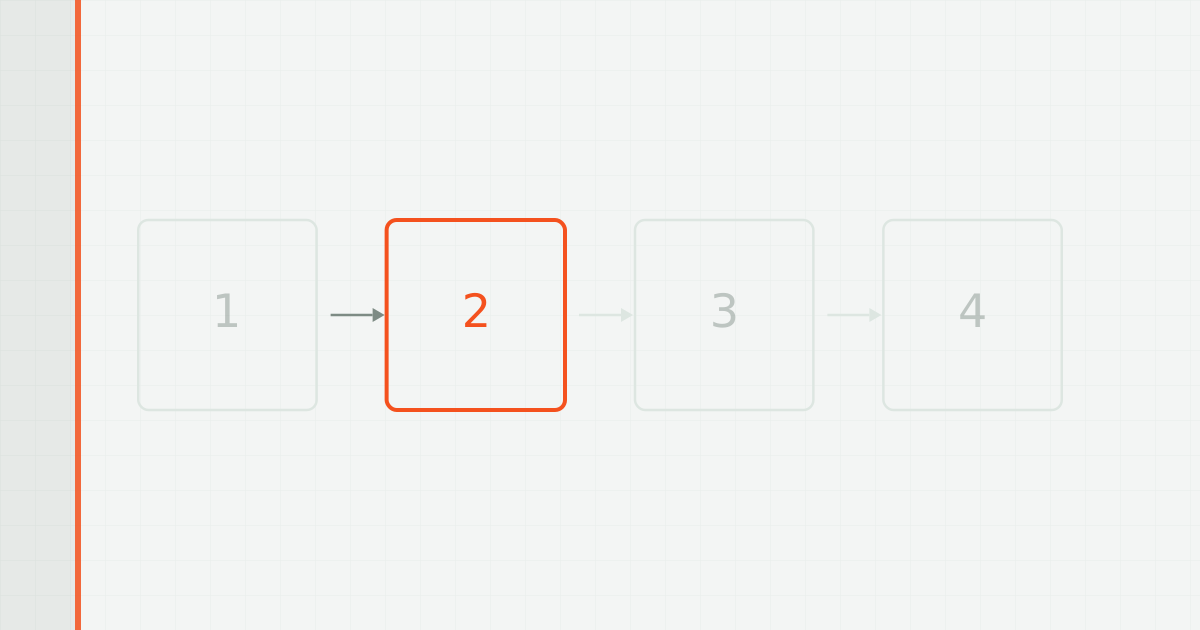
Technical access: the four gates, in order
Reachable, readable, extractable, corroborated. Each gate is binary. Working on gate three while gate one is shut is the most common way to waste a quarter.
JavaScript rendering and AI crawlers: the gap Google hides from you
Google renders JavaScript. Most AI crawlers do not. That single difference means a site can be perfectly indexed and completely invisible to answer engines.
Freshness signals a machine can actually see
Updating a page does nothing if nothing machine-readable changed. Here is which date signals exist, which ones are trusted, and how teams break them.
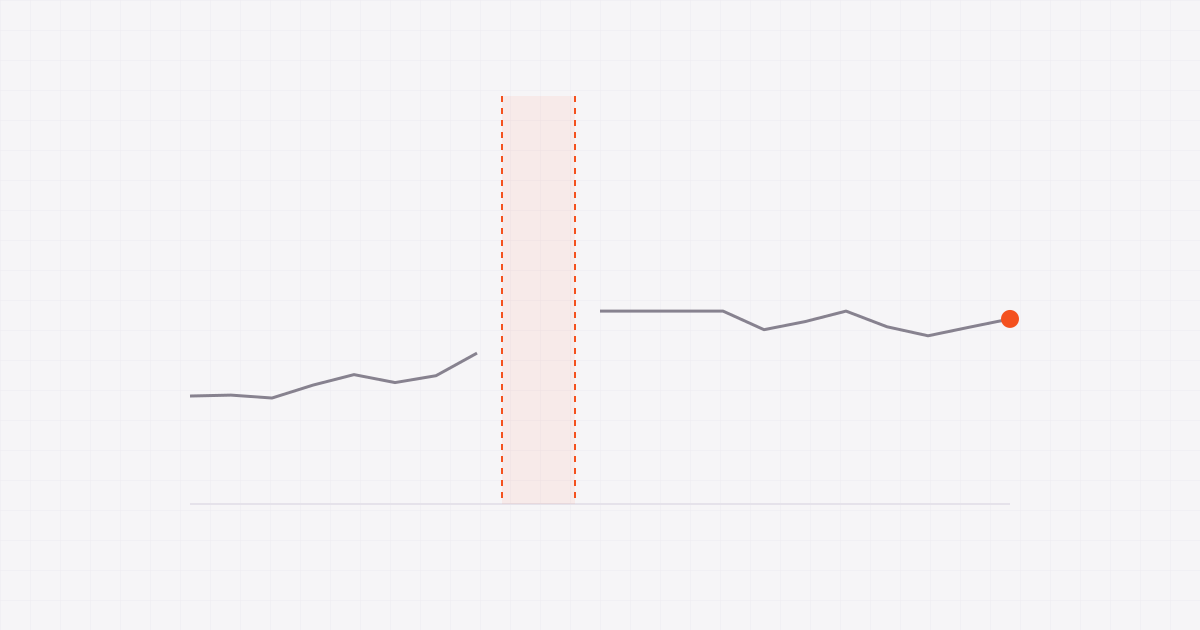
Measuring change over time when every run is different
Answers vary between runs. That single fact determines how you sample, what counts as a real movement, and why most AI visibility trend charts are noise.

Multilingual GEO: one market at a time, measured separately
Translating your site is the easy half. The half that decides the outcome is that buyers in each market phrase questions differently — and a translated prompt set measures the wrong thing.
Local visibility in AI answers: what changes when the question has a place in it
"Best dentist near me" and "best dentist in Leeds" are different questions to an engine. Measuring local visibility requires making the place explicit, and that has consequences.

Product-level visibility: when the buyer asks about a thing, not a brand
Most AI visibility work measures the brand. Shoppers ask about products. The gap between those two is where ecommerce loses, and it is invisible on a brand dashboard.
Alerting on AI visibility without training people to ignore alerts
Two bugs kill an alerting system: firing on noise, and firing every cycle while a condition persists. We shipped both. Here is what the fixed version looks like.

How to choose a GEO tool: six questions that separate them
Feature lists in this category are nearly identical. These six questions are not, because they are about methodology — and methodology is where the numbers are made or broken.

Reporting GEO work to a client who will check it
The report that survives scrutiny states its method first, splits presence into two rates, and shows what was not measured. The third one is what most reports omit.
A 90-day GEO programme with a baseline you can defend
Weeks one to two are measurement and access. If you start writing content in week one you will have no way to tell whether any of it worked.

FAQ blocks that answer engines can actually use
FAQPage markup is the most abused structured data type in this category. Used properly it is also the closest match to how an answer gets assembled.
Canonical URLs and the duplicates that split your results
One page reachable at two addresses is one page competing with itself. It produces no error, and the cost shows up as a plateau you cannot explain.
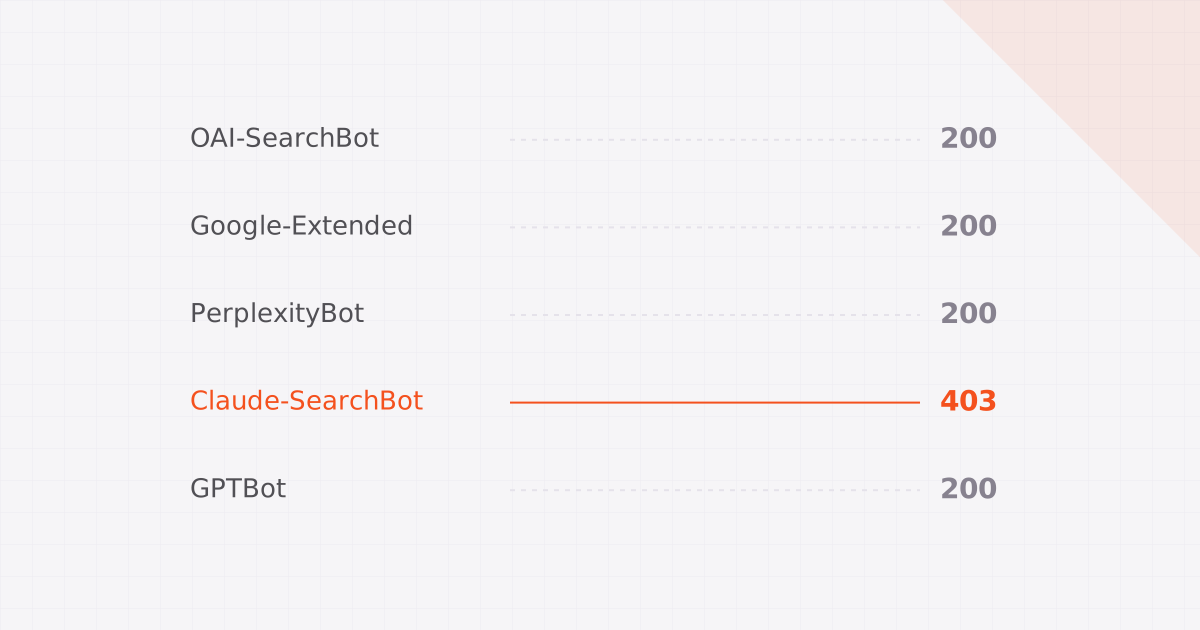
noindex where you meant it: meta robots, X-Robots-Tag and the subdomain nobody checks
robots.txt controls crawling. Meta robots controls indexing. Confusing the two produces both of the classic outcomes: pages indexed that shouldn't be, and pages blocked that can never be de-indexed.
Questions teams ask before they start
What belongs in Learn instead of Blog?
Learn holds evergreen implementation guides. Blog holds timely analysis, product updates, field notes and opinion.
Why separate glossary terms into individual pages?
Each term page answers one definitional intent clearly and can connect readers and answer engines to deeper guides and product evidence.
How are reports different from articles?
Reports require a defined method, data scope, update date, limitations and reusable findings.
Is the content gated?
No. Guides, glossary entries and reports are readable without an account.
How often is it updated?
The AI answer layer moves quickly, so material is revised when methods or engine behaviour change rather than on a fixed calendar.
Can these methods be used without the product?
Yes. The measurement framework is documented so a team can run it manually; the product exists to make it repeatable at scale.
Turn AI visibility into a repeatable growth system.
Create a project, confirm your market and start measuring the questions that matter.